
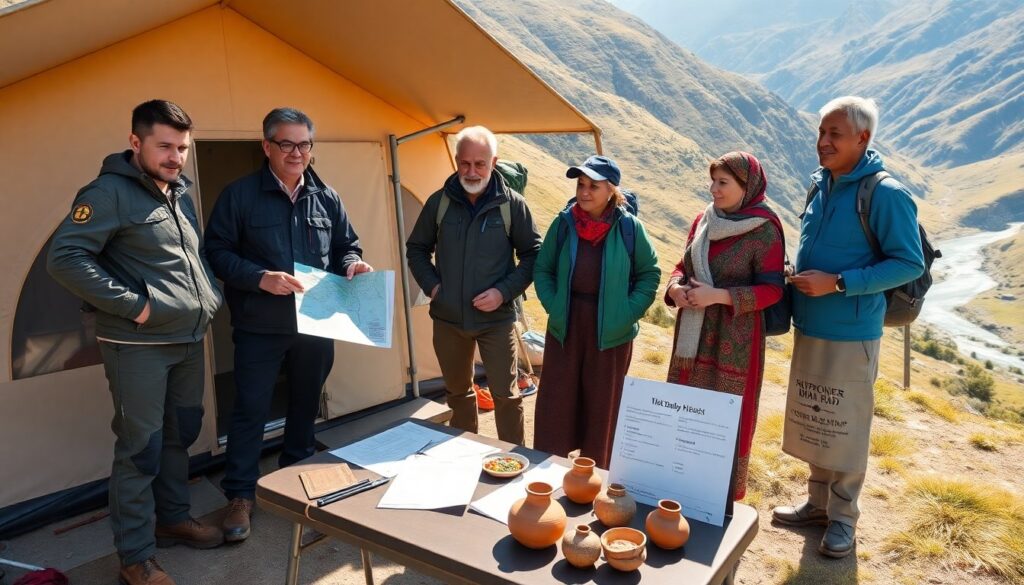
Exotic travel hiking camp AsaharaUSA offers guided treks that combine wild terrain and cultural stays. The program shows local life, teaches trail skills, and guides small groups. Travelers learn history, eat local food, and sleep near village sites. The operator runs seasonal departures, issues clear packing lists, and handles permits.
Key Takeaways
- AsaharaUSA’s exotic travel hiking camp offers guided treks that combine diverse terrain with immersive cultural experiences, emphasizing local history and traditions.
- Small group sizes ensure low environmental impact and personalized safety management, with eco-friendly campsites and community benefit projects included.
- Travelers can select routes matching their skill level, from beginner-friendly hikes to multi-day technical treks, with clear grade ratings and packing lists provided.
- Seasonal departures align with optimal weather conditions, and the operator handles permits and booking details to simplify planning and ensure compliance.
- Safety protocols include regular check-ins, guide-led navigation, and emergency communication, while responsible travel etiquette protects local communities and environments.
- Cultural immersion is enhanced by evening sessions with host families, language learning, and respect for local customs, fostering genuine and respectful exchanges.
What Makes AsaharaUSA’s Hiking Camps Unique — Terrain, Guides, And Cultural Immersion
AsaharaUSA runs an exotic travel hiking camp that mixes varied terrain and local culture. The staff selects routes that include ridgelines, river valleys, and high meadows. Each route highlights distinct plant life and viewpoints. Guides lead every group. The guides speak local languages and share brief history. The guides teach simple navigation, group pacing, and low-impact camping.
The camp pairs daytime hikes with evening cultural sessions. Locals host music, food, and craft demonstrations. Travelers watch pottery or cooking and ask questions. The host families welcome small groups for short exchanges. This design keeps visits focused and respectful.
AsaharaUSA limits group size to keep impact low. Small groups reduce trail wear and help guides manage safety. The operator uses eco-friendly campsites and composting toilets where allowed. Each trip includes one cultural project that benefits the local community. The project can be trail maintenance, school supplies, or a kitchen repair.
This exotic travel hiking camp also adapts to skill level. They publish clear grade ratings and daily distances. Beginners can choose shorter days and lower elevation. Experienced hikers can pick multi-day technical routes. The setup gives travelers a choice and a clear expectation before booking.
Practical Planning: Best Times To Go, Permits, And Booking Tips
AsaharaUSA lists seasonal windows for each route. Travelers check the operator calendar and pick dates with stable weather. Spring and autumn often offer mild temperatures and fewer insects. High summer suits alpine meadows but brings more hikers. Winter trips require technical gear and advance notice.
Permits vary by region. AsaharaUSA often secures group permits for sites with limited access. Travelers confirm permit inclusion when they book. For DIY legs, guests arrange permits through the local land agency. The operator provides links and simple steps.
Booking advice focuses on pace and group fit. Travelers read route grades and daily distances. They pick trips that match their fitness. AsaharaUSA offers pre-trip briefings and optional conditioning plans. Early booking helps secure preferred dates and guide availability. The operator posts last-minute departures for travelers who prefer flexible plans.
Budget and cancellation rules appear on the booking page. Travelers compare included items, like meals and transfers. They factor in international travel time, visa needs, and local transport. AsaharaUSA recommends travel insurance that covers evacuation and trip changes. The operator suggests an emergency contact and a copy of permits for each guest.
What To Pack, Safety Essentials, And On-Trail Etiquette For Responsible Travel
AsaharaUSA posts a concise packing list for each trip. Travelers pack light layers, a waterproof jacket, and sturdy boots. They include a small first-aid kit, headlamp, and spare socks. The list specifies water treatment options and a personal cup. Each hiker carries a lightweight sleeping bag when the itinerary requires one.
Safety rules remain simple. Guides set daily check-ins and turn-back times. Hikers stay within visual contact and report issues immediately. The team carries a satellite communicator or radio for remote routes. Guides know basic first aid and evacuation steps. Travelers bring personal medication and a basic mask and sanitizer for shared spaces.
On-trail etiquette aims to protect people and land. Travelers stay on marked trails and avoid short cuts. They pack out all waste and follow local fire rules. Hikers keep noise low near villages and respect private property. Photos remain welcome but travelers ask before photographing people. The camp asks guests to tip local helpers directly when appropriate.
AsaharaUSA encourages cultural respect through simple actions. Travelers learn a few local phrases before arrival. They follow dress guidance at host sites and accept local meal rhythms. These small choices help the trip benefit hosts and let travelers enjoy genuine exchange.