
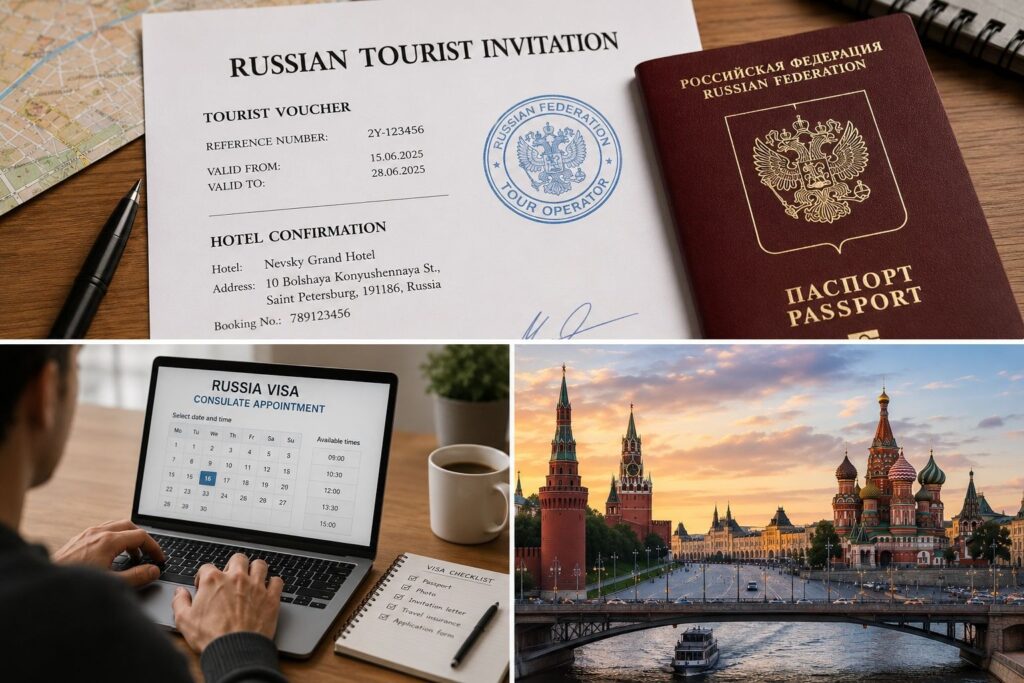
Everyone researching a first trip to Russia obsesses over the same things: which city to start in, whether to brave the Trans-Siberian, how many days Moscow and St. Petersburg actually need. Almost nobody researches the one thing that determines whether any of that happens at all — the visa invitation letter.
I didn’t either, the first time I looked into it. I’d sorted a rough itinerary, bookmarked a few hotels, and only stumbled onto the invitation requirement when a visa application form asked for a reference number I didn’t have. It turns out that for most nationalities, a Russian consulate won’t even process a tourist visa application without proof that a registered Russian entity — a tour operator or hotel — is formally sponsoring the trip. That proof is the invitation letter, and getting an invitation letter from Russia is genuinely the first thing to sort out, before hotels, before flights, before anything else on the list.
Why This Trips People Up
It’s not that the requirement is hidden — it’s that it doesn’t feel like a “real” travel task. Booking flights and picking neighborhoods to stay in feels like planning a trip. Chasing down a sponsorship document feels like bureaucracy, so it gets pushed to “later.” Except later is exactly when it becomes a problem, because the consulate appointment, the visa application, and the invitation all need to line up, and the invitation has to come first.
The reassuring part: this step has gotten a lot faster than it used to be. Tourist invitation letters can now be issued electronically within minutes once you submit a passport copy and hotel reservation, since Russian consulates have accepted PDF versions as standard since 2012. It’s not the multi-day wait people assume it is.
What the Letter Actually Is
A tourist invitation is usually bundled with a voucher and a hotel confirmation — think of it as the paperwork trio a consulate needs to see together. If you’re traveling for business instead of leisure, the invitation looks different: it comes on official company letterhead from whoever you’re meeting in Russia, and it takes a bit longer since someone actually has to verify the details rather than generate them automatically.
Either way, nobody books a hotel just to satisfy this requirement, and services that issue invitations don’t handle hotel bookings themselves — that reservation needs to already exist. Getting the order of operations right (reservation first, invitation second, visa application third) saves a lot of back-and-forth.
A Rough Timeline That Actually Works
Three to four weeks before departure is the sweet spot for starting the whole process. That gives room for:
- Getting the invitation letter (often same day)
- Booking a consulate appointment, if one’s required
- Assembling the rest of the visa paperwork — passport, photo, travel insurance
- Leaving a buffer for anything the consulate asks for that wasn’t on the checklist
Waiting until a week or two before the trip is where things get stressful, not because the invitation itself is slow anymore, but because consulate appointment slots and processing queues are the parts still out of anyone’s control.
Once the Paperwork’s Sorted, the Fun Part Starts
This is really where the actual trip planning begins — deciding whether to split time between Moscow’s grandeur and St. Petersburg’s canals, whether Kazan’s blend of Orthodox and Islamic architecture deserves a few days, or whether the slower pace of the Golden Ring towns is more the vibe. Russia rewards travelers who give it more than a long weekend, and the high-speed rail link between the two biggest cities makes it easy to see both without wasting a day in transit.
None of that matters, though, if the invitation letter is still sitting unresolved in a browser tab three days before the flight. It’s the least glamorous item on the checklist and the one that decides whether everything else happens on schedule.