
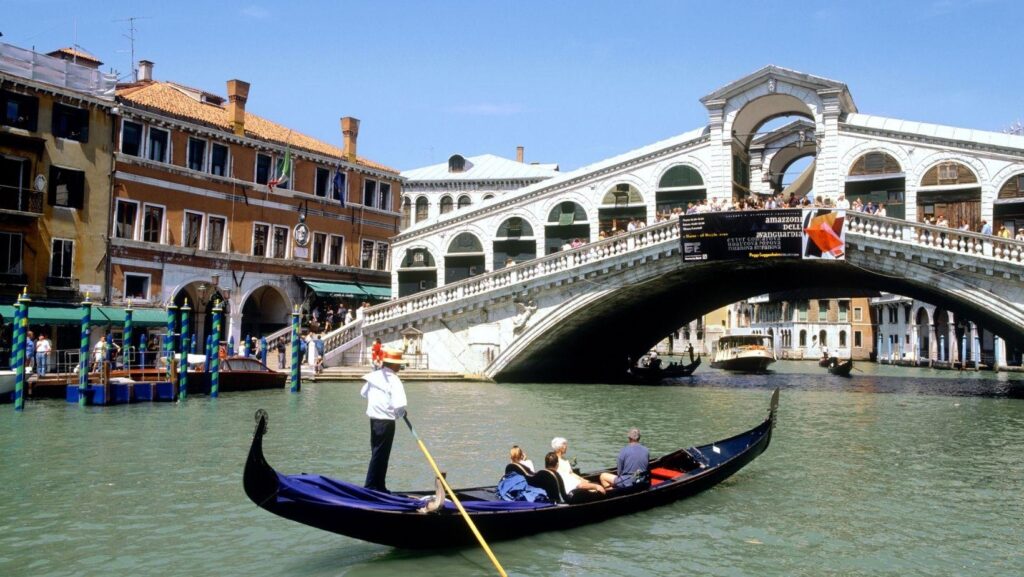
A Venice gondola has a reputation as the one splurge nobody on a budget trip is supposed to book. That reputation isn’t really fair once you look at how the pricing actually works, and a listing like Alle Travel‘s makes the actual math easier to see than most operators’ own pages do. A gondola isn’t priced per person. It’s priced per boat, and one boat holds up to five people, which changes the math completely for anyone traveling in a group rather than alone.
The Price Isn’t What It Looks Like
The standard rate covers a thirty-minute ride for the whole gondola, not a single seat, and that flat structure is what most budget guides skip over. Split a single fare across four friends instead of booking four separate “experiences,” and the per-person cost drops close to what a sit-down dinner would run in the same neighborhood. Traveling solo makes the math worse, since a lone rider covers the whole boat alone unless a shared option happens to be running that day. Traveling with even one other person already cuts the cost in half.
Why Five People, Specifically
The five-passenger limit isn’t an arbitrary booking rule. It comes from the boat itself. According to Wikipedia, a traditional gondola is a single-oar boat rowed by one gondolier standing at the stern, and the hull is sized and balanced around that one-person propulsion system. Cram in more weight than the design allows, and the boat sits lower, handles worse, and puts more strain on a gondolier who’s already compensating for an asymmetric hull built to counter a one-sided stroke. Five passengers is close to the practical ceiling before the ride itself starts to suffer, not a number picked to sell more or fewer seats.
Day Rates Beat Night Rates
Timing changes the price too, and it’s one of the easiest ways to save without giving anything up. Rides booked between roughly eight in the morning and seven in the evening run at the standard day rate. Anything later, into the evening and overnight hours, costs more, sometimes noticeably more, since gondoliers price the romantic sunset slot at a premium. A late-afternoon ride, timed for the hour right before the evening rate kicks in, gets close to the same golden light without paying for it.
What’s Actually Included, and What Isn’t
A standard fare buys the ride and the gondolier, and nothing else. Singing, live music, and a bottle of prosecco are add-ons, arranged separately and priced on top of the base fare, not bundled in by default the way some tour listings imply. Skipping the extras is a real way to save, and honestly, the ride itself, gliding under old bridges at water level, doesn’t need a soundtrack to be worth doing. I’d rather spend the saved money on a proper meal afterward than a ten-minute serenade I didn’t ask for.
Comparing Before Committing
Rates and routes vary more by operator and dock than most people expect, and there’s no single official price list a visitor can check in advance without some digging. Comparing a few operators before showing up at a random dock at least gives a sense of what’s normal, so nobody’s guessing whether a quoted price at the water’s edge is fair or padded for a group that looks like first-time tourists.
The Group-Size Sweet Spot
Four or five people gets the best per-person value on a shared boat, since that’s close to the gondola’s actual capacity without anyone feeling cramped. Splitting the ride between two people still cuts the cost meaningfully, just not as dramatically. Below that, the math stops being a budget trick and starts being a genuine splurge, which is a fine choice too, just a different one than what this is about.
A Few Ways This Goes Wrong
None of this works if the group splits up mid-negotiation, which happens more than people admit. Agreeing on a price and a headcount before walking up to a dock avoids the awkward moment where two people back out and the per-head math falls apart in front of the gondolier. It’s also worth carrying small bills. Change isn’t always available on the spot, and a rounded-up tip because nobody had the right cash adds up fast across a group.
Doing the Math Before You Book
None of this makes a gondola ride cheap in any absolute sense, and pretending otherwise would be dishonest. What it does is turn an expense that looks fixed and steep into something closer to a group activity with real, controllable levers: group size, time of day, and which extras actually get added on. Treated that way, the ride stops being the one line item budget travelers skip on principle, and starts being something worth actually planning around instead of avoiding.